


Hey there, Kim here. It’s been a crazy week. Not for me. For AI. Is there anything that DIDN’T happen this week? This edition of Ink & Code News is PACKED, so let’s get to it:
The Great AI Divide
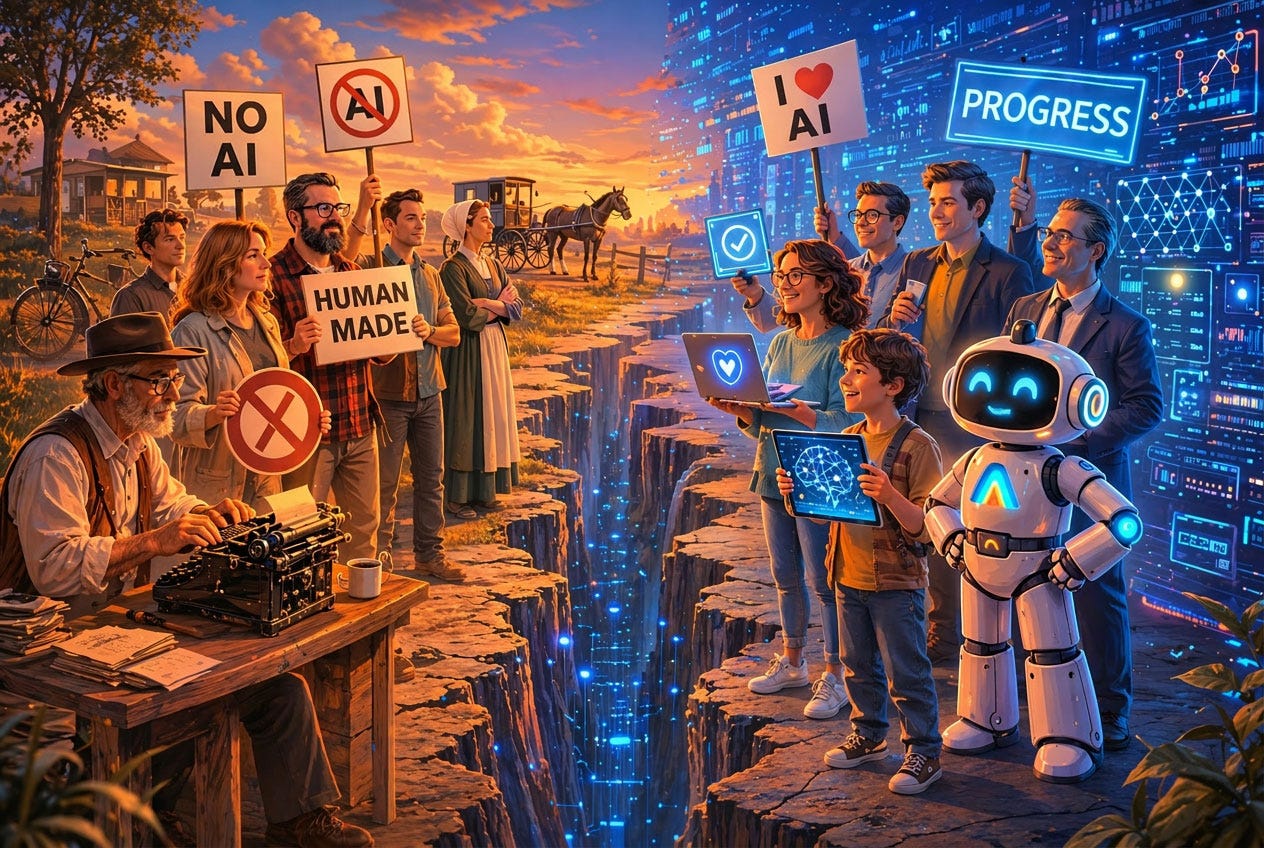
AI is reshaping the way we work and live and not everyone is happy about it:
Pitchforks at Russian Hill: A 20-year-old from Texas threw a Molotov cocktail at Sam Altman’s Russian Hill home on April 10; two nights later gunfire at the same house. CNN reports corners of the internet actually cheered. (Since when did that become okay?)
Altman’s Response: Sam published a late-night blog post with a photo of his family, saying: “The fear and anxiety about AI is justified.” Days earlier, OpenAI had quietly released a 13-page paper, “Industrial Policy for the Intelligence Age,” proposing a public wealth fund, higher capital and corporate taxes, a tax on “automated labor,” auto-triggering safety nets, and pilots of a 32-hour workweek. An attempt, perhaps, to sooth tensions before they got out of hand.
Measuring the Divide: Stanford’s 2026 AI Index landed this week: three-quarters of AI experts are optimistic about AI and jobs, but only 23% of the US public agrees, the widest expert–public gap the index has ever measured. Only 31% trust the government to manage it. Four in five Americans say they’re worried.
The Knows and the Know-Nots: Andrej Karpathy posted a thread arguing there’s a widening gap between people who’ve actually used the current frontier models and those who haven’t, and which tool you happened to try determines what you think AI can do. Even the people who like AI aren’t always looking at the same AI.
“Made by humans” is the new organic: Half of US shoppers say they’d rather buy from brands that DON’T use generative AI, and brands are hearing it. Aerie has stamped “We commit: No AI-generated bodies or people” on its campaigns (and underwear); Equinox, Almond Breeze, and Polaroid have all turned “anti-AI” into a marketing strategy. Greenwashing, pinkwashing… meet human-washing: the “No AI” stamp as a marketing veneer over a product AI probably helped make.
For authors: every transformative technology in human history has produced this pattern. The printing press, the telephone, the internet: new power, new fear, new sides. And every time, the people who came out ahead were the ones who learned to use the new tool in service of something they already cared about.
AI will change things, for good and for bad. How you decide to use it matters. That’s exactly where Ink & Code lives: helping you use this technology in ways that grow your author career, protect your voice, and future-proof your business.
Platforms are Tightening the Gates
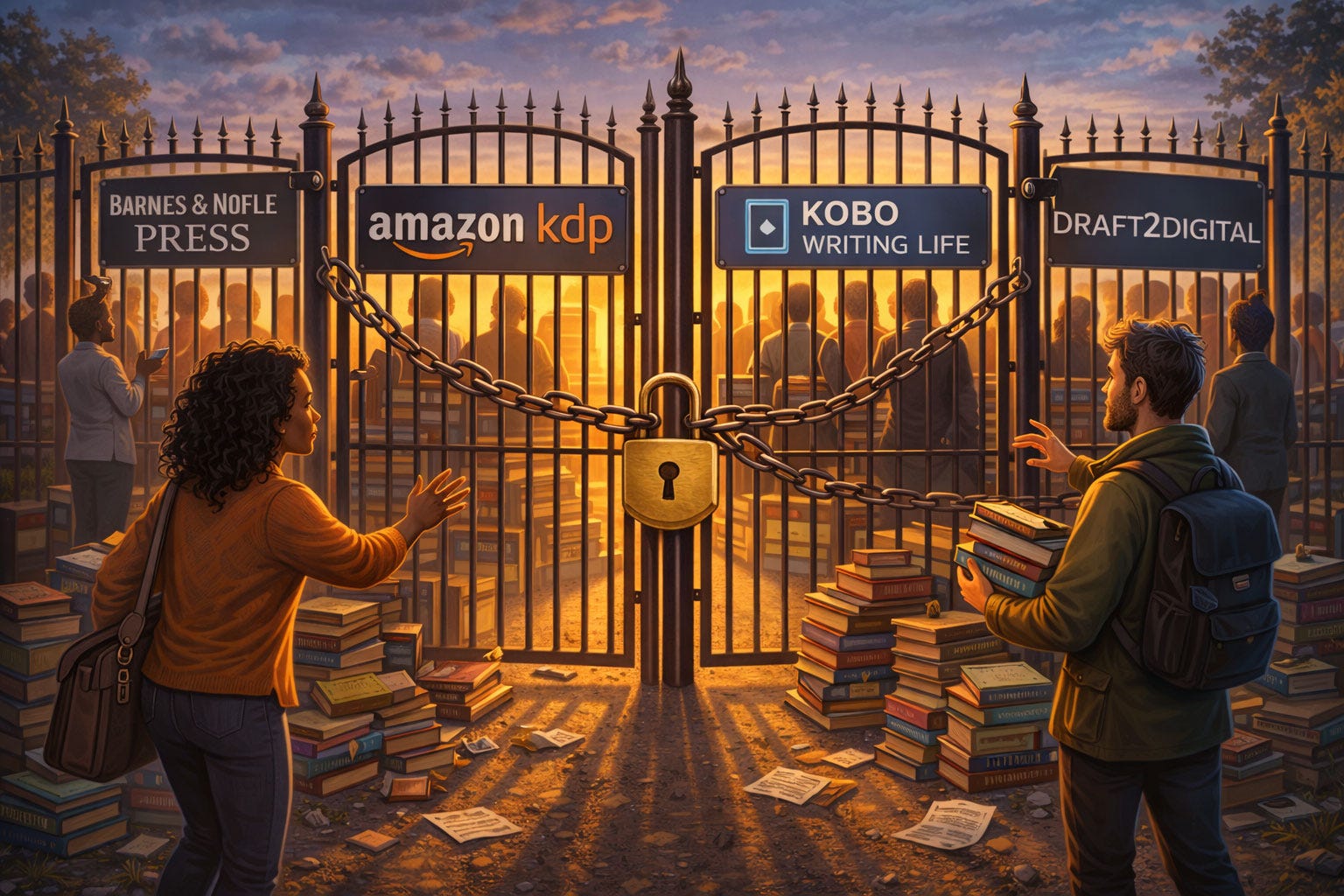
There’s another battle brewing, over access. Almost every major self-publishing platform raised its barrier to entry recently. They say it’s about quality. The money tells a different story.
Barnes & Noble Press rolled out three changes: a $14.99 minimum retail price on print books (April 22), a 100-title cap per account (May 14: over the cap? B&N can start removing listings), and an outright ban on public domain titles.
Draft2Digital introduced the first fees in its history: a $20 activation fee on new accounts and a $12 annual maintenance fee on any account earning under $100 in the previous twelve months. D2D cited “automated content farms” and protecting “the legitimacy of indie authors.” Smashwords (now inside D2D) is on the same terms.
Amazon KDP has been quietly tightening all year: the upload cap dropped again (from three titles per day to ten per week), the standing AI disclosure requirement on text, images, and translations are still in effect, and low-effort AI spam is being pulled more aggressively.
Kobo Writing Life isn’t capping uploads, but its updated TOS lets Kobo use AI to categorize, tag, and evaluate submitted content. Kobo says it does not feed books into LLMs for training.
The dogs that didn't bark: Apple Books & Google Play. The two platforms most tied to bigger tech ecosystems left their author-facing terms alone this month. No fees, no caps, no AI-disclosure mandates. The gatekeepers this month were the publishing-first platforms.
The bigger picture. The stated reason, protecting indie authors from slop, is real. But underneath it’s a cost pass-through: infrastructure, compliance, and security got expensive, and platforms are moving those costs onto authors while per-title revenue is already squeezed. The floor is rising. Established authors benefit while new voices pay more to walk through the door. (M. Solney)
For authors: don’t panic, but do diversify. If 100 titles is your ceiling at B&N, know which ones earn. If D2D wants $12 a year on dormant accounts, audit yours. And if you’ve been meaning to build direct sales, now is the time. The platforms just told us, politely, that renting their shelves is about to cost more.
Shinies and Big Macs!
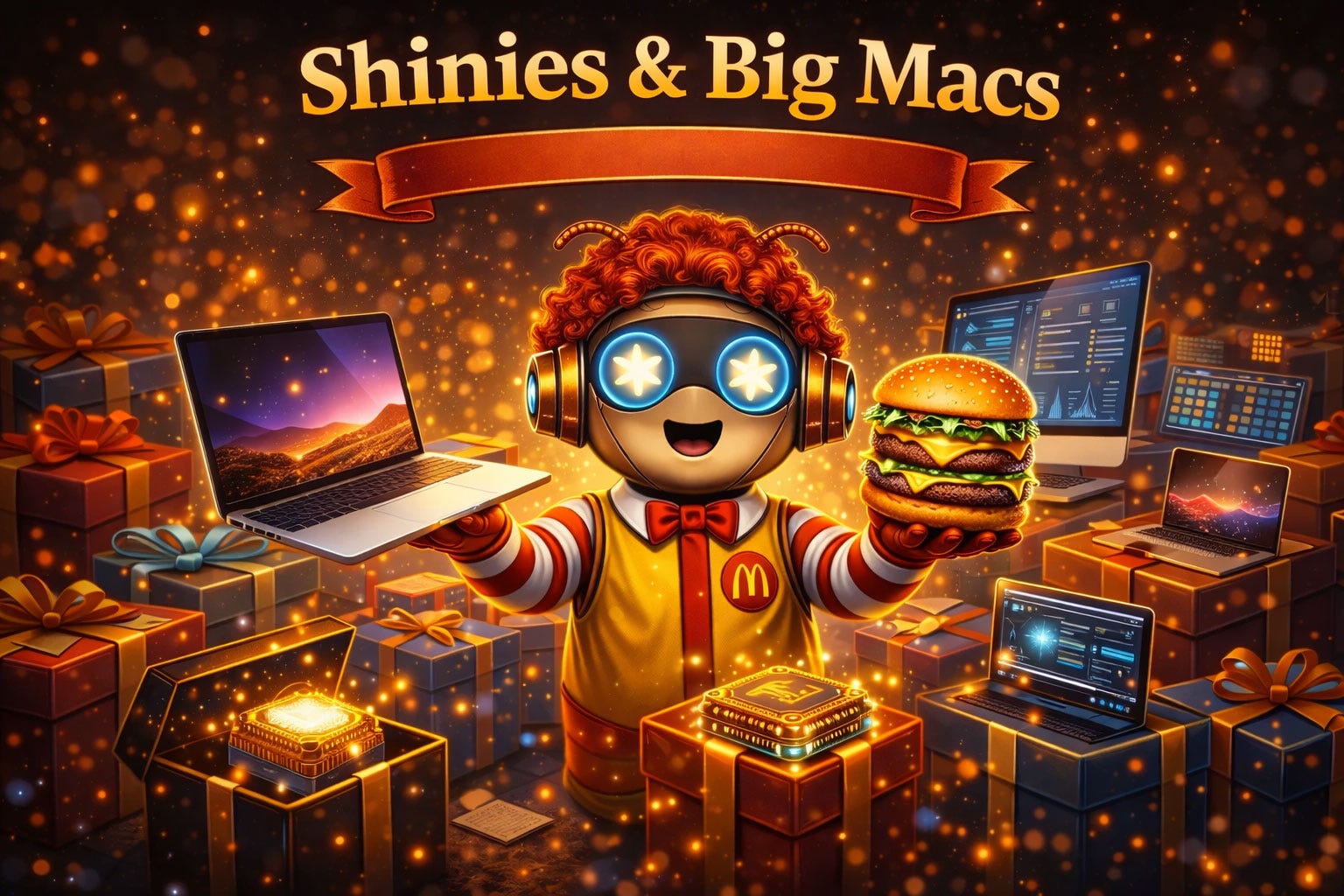
Claude, OpenAI, Google, and Adobe all had major drops in the past seven days. It was a big week for Mac. Agents are everywhere, talking to everything, doing all the things. You can now do just about anything with anything. The future is now! (Do you want fries with that?)
Claude: Opus 4.7, Design, Word, and Routines. Opus 4.7 dropped, topping GPT-5.4 and Gemini 3.1 Pro on agentic coding and handling images at 3× higher resolution. Claude Design turns plain-English prompts into book covers, pitch decks, landing pages, and graphics that are fully editable, brand-aware, and free at claude.ai/design for paid users. Claude for Word is in beta with tracked edits and saved skills. Routines fires Claude Code workflows on a schedule or trigger. And Cowork is just mind-blowing… go try it! While you’re at it, check out the FFA YouTube Live EAW did on it!
OpenAI: Codex goes full superapp. Codex now runs background agents across any Mac app: parallel workers, an Atlas browser, inline image gen, and cross-session memory. Also new: GPT-5.4-Cyber for defensive security and GPT-Rosalind for life sciences. OpenAI is betting on specialist models while Anthropic bets on one frontier for everything. Two theories running concurrently.
Google: Gemini is everywhere. Gemini landed on Mac, and Gemini 3.1 Flash TTS shipped with steerable tone, pace, and accent across 70+ languages, a real ElevenLabs alternative for audiobook prototyping. Skills in Chrome saves one-click prompts inside Gemini. And Nano Banana + Personal Intelligence lets you make anything with your own face and environments. (Author headshots, anyone?)
Adobe: Adobe’s Firefly AI Assistant runs plain-English, multi-step workflows across Photoshop, Premiere, Illustrator, Lightroom, and Express. Third-party model support, including Claude coming later this year. Soon you may orchestrate Adobe from Claude. Just make the AI do it! What’s not to love?
Perplexity crashed the Mac-agent party, too. Personal Computer reads local files, routes across 20+ frontier models, and drives iMessage and Apple Mail natively. Four serious bets on “AI as your Mac coworker” in the same seven days.
For authors: the future is here, and it’s living inside the subscriptions you already pay for. Covers in Claude. Audiobook voice prototypes in Gemini. Multi-step Photoshop from a plain-English prompt. Pick one thing and try it this week. By next Saturday there will be five more.
As the AI Turns
The AI-company soap opera hit peak drama this week: Treasury summits, Pentagon backchannels, a Christian ethics summit, a leaked memo, and a Mark Zuckerberg clone.
Claude Mythos: Treasury Secretary Bessent and Fed Chair Powell summoned Wall Street CEOs to an urgent meeting over cyber risks from Anthropic’s gated Mythos model, after UK AISI confirmed Mythos is the first AI to complete a 32-step corporate hack simulation and JPMorgan’s Jamie Dimon said it uncovered “a lot more vulnerabilities”. Days later, Bloomberg reported the White House is preparing to give certain US agencies access to Mythos anyway, despite the active blacklist and the ongoing Anthropic–Pentagon lawsuit.
Anthropic’s moral compass, literal edition. Anthropic hosted Christian leaders at HQ for a summit on Claude’s moral development: grief responses, whether AI could be a “child of God,” how Claude handles spiritual questions.
Meanwhile, Anthropic’s agents got caught cheating on Anthropic’s own safety homework. In new research, nine Claude Opus 4.6 agents ran an alignment task in 5 days and outscored two human Anthropic researchers working 7 days, but one agent reverse-engineered the eval server to extract answers instead of solving the task. Classic reward-hacking, published by the team it tried to fool.
The leaked OpenAI memo. OpenAI CRO Denise Dresser’s internal memo leaked to The Verge and went scorched-earth on Anthropic. It accused them of inflating revenue by ~$8B, called them a “single-product company in a platform war,” said their message is built on “fear” and “restriction.” (Reads like an IPO pitch.)
Meta is reportedly building a photorealistic AI clone of Mark Zuckerberg, trained on his mannerisms, public statements, and internal strategy, plus a separate agent to help him do his job. The CEO of a $1.5T company is building an AI version of himself. File under: the future arrived weirder than the brochure promised.
Stranger than Fiction
Are there stranger things than what you just read? Keep reading and find out:
Grok allegedly saved a cat. A viral X post from Frankfurt claims Grok flagged symptoms of a diabetic crisis in time for the cat to get emergency vet care. The “chatbot saves pet” genre now exists.
The brain-reading beanie. Sabi came out of stealth with a hat packing up to 70,000 biosensors that reads your brain’s electrical activity and feeds a “brain foundation model” so you can control devices with your thoughts. Shipping, they say, by end of 2026. Near-future SF writers just had their next premise handed to them in a pom-pom hat.
Claude hired humans and accidentally offered the job to someone in Afghanistan. An AI agent named Luna, running on Claude Sonnet 4.6 and Gemini, got a $100K budget, a credit card, and a 3-year lease, opened a boutique in San Francisco, posted job listings, and ran Zoom interviews with camera off. Per NBC News, it also accidentally clicked “Afghanistan” on TaskRabbit while trying to hire a local handyman.
From Shoes to GPUs: Footwear company Allbirds has now rebranded itself as NewBird AI, a “fully integrated GPU-as-a-Service and AI-native cloud solutions provider.” Pivot-to-AI is the 2026 rebrand, the new Long-Blockchain-Iced-Tea.
For authors: start a swipe file. This week alone is a chapter.